
When we listen to the name “Montessori”
We all think of those colorful stacking toys or something to do with rainbow furniture, but What if I tell you that you can start with the Montessori method without having to spend all your money on fancy gadgets? Keep reading to learn how.

Montessori, a name I am sure everyone who has a child has heard it at least once… Why is that?
Well first off all, Maria Montessori was one of the first female doctor in Italy in the 1800’s, not only that, she noticed how the children with emotional or mental disabilities were left out and in consequence sensory deprived of their environment. She started observing them!
With time and educational experiments she learned how children engaged and how was their learning process, making it easier for them to gain knowledge and skills, at the end of the experiment most of the children from these studies got higher marks than children without disabilities, this called the attention of the Italian Government, implementing her methods in italian schools and now it has spread worldwide.
So what can we get from this little brief history chapter? I don’t want to overwhelm you with a bunch of text, so let’s break this down to 5 steps and make it easier to understand.
5 steps to start with the Montessori method in your home
1. Let your child help you with the chores.
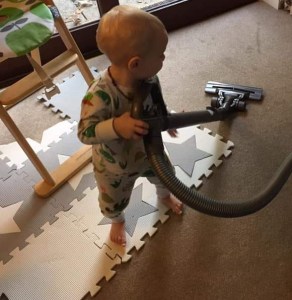
Kids love to feel like they are helping you… Of course things will be 3 times slower than if you make the chores yourself and by yourself, but I always see this as a moment for connection, also your child is gaining skills and a sense of order an discipline, bonus they are not watching TV or playing with the tablet (nothing wrong with a little dosis of those, just not very comfortable with the idea of the TV or tablet being “the nanny”).
If you’re cooking, give your child a pan with a wood spoon to play with, if you are vacuuming give them a broom to pretend, let them help you with the laundry, they don’t have to actually clean something but you’ll see how much fun you two will have together while your child is learning. Even though they are small, they want to be involved on how things happen.
2. Enjoy nature as much as you can.

This is not only a Montessori principle but also Waldorf’s, don’t let your child be afraid of a little rain or snow, let them play in every weather there is, jump in mud puddles, roll on the sand, etc. who cares of a pair of dirty pants? They are exploring the world, everything is new for them and you shouldn’t restrict them.
You should encourage them, follow them and guide them to keep themselves safe while having fun and learn from the environment at the same time.
3. Keep a routine
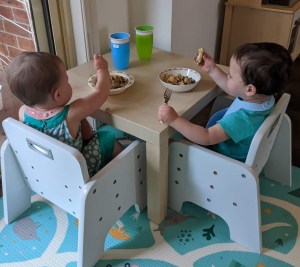
This one requires a bunch of discipline, not from your Love One but from you!
When your toddler cries about not using their favorite spoon when they are eating, it is a sign of how much they love routines and consistency. Montessori was one of the first on noticing and applying this.
Keep a schedule of what you will do every day, it’s not that you HAVE to follow it otherwise your house is not Montessori aligned.
No
You can be flexible, but what I mean with a routine is to keep the days as similar as possible, eat, bath them and play with them at a exact hour every day, when you least expect it your toddler will be the one remind you that is time for some task.
Also try to never interrupt the child task until it is finished, then you start a new one, everything will flow calmly and with a sense of completion. That discipline we talked about in the beginning will be worth it.
4. Don’t use threats or bribes.
Those are far away from the Montessori approach, because they give you a fast solution, one that will fade away and the problem will come back, and you will be where you started, the child cooperates just to avoid the negative situation or to take advantage of the positive one, with time it will become a circle where your children will stop listening to you.
Yes, it is that bad.
So do I have to accept all their behavior? Absolutely not, we as parents have to put limits, but not at the moment our child is having a big tantrum and you’re stressed and not able to make decisions, don’t do something you will regret later.
We can put limits when everyone is calm, but you must remember them and apply them every time otherwise your child won’t respect the limits.
How do you put limits? Giving the kids choices and options; instead of saying “put on your shoes”, say “do you prefer the blue shoes or the white ones”, this give the child a sense of control, and I assure you he will put on the shoes he chose.
Positive language: instead of saying “don’t yell / stop yelling” try saying “let’s use inside voice” while whispering, this way your are showing them how they should talk in a positive way. My favorite that work like a charm in my toddler is: “run like a cheetah” instead of “hurry up”.
Give information: instead of saying; “you must put the banana peel in the wastebasket please” say “the banana peel goes in the wastebasket”, they will figure out themselves what they should do, and will do it because they want to, not like an order.
There are more, we will study these in another blog post, to avoid make this one too long and boring.
5. Respect the child
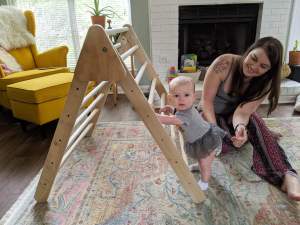
Last but not least, and with respect I not only mean hitting or rising your voice, labeling (the shy boy, the clever one, the naughty baby) can affect your child in many ways including their self esteem, not feeling heard, not validating their feelings, all of these affect them psichologically.
The first 3 years of a child are crucial for their development and personality in the future. Even when you think your toddler has nothing to say or doesn’t know what he is talking about, listen to them, do not underestimate them.
Ask them how are they feeling and find a solution about the problem together, never make him feel like your are more intelligent or better just because you’re the adult.
Respect their physical space, if they need some time alone, don’t get offended, give it to them, if they don’t like something in their room, take it away, it doesn’t matter how silly you think the reason is, the same with persons.
Respect their body, never force them to kiss you or someone else, not even hugs, not even a hand shake, if he doesn’t want to have contact with someone, don’t force them, and don’t make them feel like they’re doing wrong.
They are little person who has thoughts and feelings, and soon they will become a whole person, so we must start to listen to them now, so that person in the future won’t be scared of showing who they are.
In conclusion
As you can see Montessori is not only fancy gadgets and furniture, it is mostly the way you treat your child, and include him in the daily life as much as you can.
Remember your kid won’t remember any of the toys or what you tried to teach him, they will remember you, and your attitude towards them, so when you are around your child try to be your bigger self, the best you can be. So let’s work on ourselves!
 My Kid's Method